
Local visibility · New Zealand business growth
When potential customers search for a service in Auckland, Hamilton, Wellington or Christchurch, does your business appear where they are looking? And when they find you, do they get enough confidence to enquire?
Local business SEO is about connecting a business with customers searching in its service area. It includes how your business appears in Google Search and Maps, how accurately its services and locations are described, and whether your website helps visitors take the next step. For an established New Zealand business, the objective is not simply more website visits. It is more relevant enquiries from customers you can genuinely serve.
This guide brings together the practical foundations of local SEO, the role of Google Business Profile, on-page improvements, reviews, local citations and backlinks, and how to evaluate a local SEO company. It also explains where newer AI search experiences fit — without suggesting that any tactic guarantees a ranking or sale.
What Is Local Business SEO?
Local search engine optimisation (local SEO) improves how clearly a business is represented to people searching within a relevant geographic area. A café might want to appear when someone looks for breakfast nearby. An engineering supplier may need visibility across Auckland and Waikato for specialist commercial searches. A service-area business may serve customers without operating a public shopfront.
Local SEO therefore is not a universal checklist. The right work depends on the business model, customer location, services, competitive environment and the way people buy. A strong approach aligns your Google Business Profile, website, reviews, third-party mentions and enquiry process.
How Google Determines Local Visibility
Google describes three broad factors behind its local results: relevance, distance and prominence. Relevance is how closely the business matches a search. Distance concerns location relative to the searcher or place in the search. Prominence reflects how well known and established a business appears, using signals that may include links and reviews. Google does not sell better organic local rankings. Read Google's local ranking guidance.
| Factor | What it means for your business | What you can improve |
|---|---|---|
| Relevance | Does Google understand your actual services? | Correct business categories, service details and useful website pages. |
| Distance | How close is the business to the search location? | Accurate address or legitimate service-area settings; no misleading locations. |
| Prominence | Is the business established and trusted? | Genuine reviews, reputable references, useful local partnerships and links. |
For business owners, the practical question is whether the right customers can find your business for the right services. Ranking first for an irrelevant term is less useful than ranking visibly for a specialist service that produces qualified enquiries.
Optimise Your Google Business Profile First
Your Google Business Profile (GBP) is often the most prominent representation of your business in Maps and local search. An incomplete profile can create confusion even if your website is well built. For businesses eligible for a profile, start with the essentials before spending time on constant posting or cosmetic changes.
A practical Google Business Profile checklist
- Claim and verify ownership. Ensure the business controls its listing rather than relying on an old agency or former employee.
- Select accurate categories. Choose the primary category that best reflects the core business, with relevant secondary categories where appropriate.
- Confirm your name, address and phone. Use your genuine business identity and correct contact details. Set a service area correctly if customers are served at their locations.
- Describe real services. Provide clear service information and accurate opening hours, including special hours when relevant.
- Use authentic photos. Show the people, premises, equipment, completed work and products customers actually want to assess.
- Invite genuine reviews. Ask customers for honest feedback and respond constructively. Never purchase reviews or selectively incentivise positive ratings.
- Maintain the profile. Keep details accurate when staff, services, hours or premises change; use posts and other features when they are genuinely useful.
A profile alone is not the whole customer journey. If its website link leads to a vague homepage, an outdated offer or a difficult contact form, visibility may not turn into enquiries.
Make Your Website Relevant to Local Customers
A strong local website answers the questions customers ask before contacting you: What do you do? Where do you operate? Who do you work with? What makes you credible? What happens next? Each important service needs enough clear information to establish relevance without creating dozens of near-identical location pages.
On-page improvements worth prioritising
- Service-specific pages. Explain what the service includes, who needs it, typical project requirements and the geographic areas genuinely served.
- Clear page titles and headings. Use natural service-and-location language where relevant, not repeated keywords stuffed into every heading.
- Useful local evidence. Include genuine examples, project photos, case studies, client questions and proof of experience.
- Fast, accessible mobile pages. Ensure pricing or quotation information, phone numbers and forms work on a phone.
- Consistent business information. Check that contact details on the website match the Business Profile and other important listings.
- Relevant internal links. Connect educational articles to the related service page and a meaningful next step.
- Accurate structured data. Use appropriate business and article schema where it reflects visible, factual content; avoid adding unsupported claims or ratings.
At Pixels, we treat website content and conversion as connected. A page can attract impressions and clicks but still fail commercially because visitors cannot quickly understand what the business offers or why they should trust it. Our Website Conversion work examines what happens after people arrive.
Build Local Citations, Backlinks and Real-World Trust
A citation is a mention of your business and its identifying information on another website. A backlink is a clickable link from another website to yours. They are related, but not identical. Neither should be pursued as a numbers game.
The strongest opportunities usually arise from real business relationships: a relevant trade association, a reputable supplier, a local business group, a project partner, a professional directory or local coverage that genuinely mentions your work. Accurate information matters more than scattering your details across hundreds of low-quality directories.
Where to start
- Correct inaccurate or duplicate listings on significant industry and local directories.
- Check chambers of commerce, recognised trade bodies and specialist supplier networks for appropriate memberships or listings.
- Publish useful project case studies that customers and legitimate partners may want to reference.
- Build relationships with complementary businesses and local organisations where there is genuine customer value.
- Avoid buying bulk links or participating in artificial link schemes.
A credible link from a relevant local or industry source can be more commercially meaningful than dozens of unrelated mentions. The same principle applies to testimonials and reviews: authenticity is the asset.
Reviews and Reputation Influence the Decision to Enquire
Being visible is only part of the job. Customers compare the businesses they discover. Reviews can help them judge reliability, communication and after-sales support — especially when the service is expensive, complex or difficult to assess in advance.
Ask for reviews at appropriate stages of the customer relationship, respond professionally and identify repeated themes in feedback. Useful website trust signals can include credentials, named people, project processes, service guarantees that are genuinely offered and case studies with verifiable outcomes.
SEO, AEO and GEO: What Changes With AI Search?
Search behaviour is expanding beyond traditional blue links. People may receive direct answers, summaries or recommendations through Google AI Overviews, AI Mode and other AI-powered systems. This has led to the terms Answer Engine Optimisation (AEO) and Generative Engine Optimisation (GEO).
The boundaries overlap. In practical terms, an established business should make its information understandable and trustworthy across search experiences: clear service descriptions, evidence of expertise, accurate location information, helpful answers and consistent third-party references. Google says there are no special extra technical requirements for inclusion in its AI search features beyond the established search fundamentals. See Google's AI search guidance.
Neither AEO nor GEO guarantees that an AI assistant will mention or recommend a company. The useful commercial question remains whether your business is being discovered by relevant customers and whether that discovery leads to worthwhile conversations.
How to Measure Local SEO Beyond Rankings
Impressions and positions in Google Search Console show whether pages are being seen, but they do not show whether those appearances lead to business. Reviews, Maps visibility and clicks offer additional clues. Enquiry records, qualified leads and eventual sales tell a fuller story.
| Question | Useful evidence | Possible action |
|---|---|---|
| Is demand changing? | Search trends, seasonal patterns, sales enquiries and industry activity. | Adjust priorities and expectations before increasing spend. |
| Are customers finding you? | Search Console queries and pages, GBP performance and competitor search presence. | Improve relevance and visibility for high-value services. |
| Do visitors enquire? | Contact forms, calls, analytics events and customer feedback. | Fix messaging, trust signals and enquiry pathways. |
| Are leads commercially useful? | Lead source, enquiry quality, quotes issued and sales outcomes. | Prioritise the channels that lead to profitable work. |
For example, a post may receive hundreds of impressions but no clicks. The first step is to examine its actual search queries and position, then review whether its title matches search intent. That is more useful than assuming the article needs to be deleted or rewritten for a completely different keyword.
What Should a Local SEO Company Actually Do?
When hiring a local SEO company, ask what it will investigate before prescribing an ongoing package. A good provider should explain the starting position, the evidence behind recommendations, the likely trade-offs and the limits of what SEO can achieve.
Questions worth asking an SEO provider
- Which customer searches and service areas matter most to our business?
- How will you distinguish weak search demand from lost visibility or poor conversion?
- Will you inspect our existing content, Google Business Profile, mobile experience and competitors?
- How will you measure qualified enquiries rather than only rankings or traffic?
- Which changes can produce the greatest value with the smallest sensible investment?
- What work is included, what is not included and who owns the reporting accounts and content?
Be cautious of guarantees of a number-one Google ranking, unexplained link packages or reports that contain only keyword positions. Pixels' approach starts with a diagnosis, then prioritises changes through Search & Local Visibility, website conversion improvements and other appropriate services — not a predetermined bundle.
Ten Practical Steps for Better Local SEO
- Record your baseline. Note current enquiries, important keywords, top landing pages and Google Business Profile performance.
- Review your market. Check what customers currently search for and whether demand is seasonal or shifting.
- Verify your GBP. Confirm ownership, categories, services, hours and business details.
- Compare competitors. Look at who appears for searches that matter and how clearly they position their services.
- Improve key service pages. Address missing detail, unclear offers and weak trust signals.
- Check the mobile enquiry journey. Test buttons, phone links, forms and page usability.
- Collect genuine proof. Publish relevant reviews, photos and project or customer examples with permission.
- Correct significant citations. Repair inaccurate business details on relevant external sites.
- Connect content to services. Link helpful articles to useful, closely related service pages.
- Measure and refine. Review search visibility, enquiry quality and sales outcomes before deciding what to do next.
You don't have to do everything simultaneously. The right order depends on where the greatest loss of opportunity actually occurs.
From Local Visibility to Real Business Growth
For a New Zealand business, local SEO succeeds when the right people can discover its services, understand why it is worth considering and make contact easily. That requires accurate business information, relevant website content, credible third-party evidence and a clear customer journey.
It also requires discipline. Improving rankings is not the same as improving revenue. If customers have delayed projects or competitors are capturing demand with clearer offers, the solution may extend beyond traditional SEO. The evidence should determine the work.
Pixels helps established businesses find where online opportunities are being lost, fix what matters first and build visibility over time. That approach is designed to make each intervention commercially sensible, whether the answer is a Google Business Profile correction, a stronger service page or a broader growth sprint.
Are Local Customers Finding Your Business — and Enquiring?
Before you commit to more SEO spending, find out whether the real gap is search demand, Google visibility or the experience customers have once they reach your website.
Find the opportunity. Fix what matters. Keep building growth.
Explore the Revenue Opportunity Audit →Further reading: Google Business Profile local ranking guidance · Google Search Central: AI features.
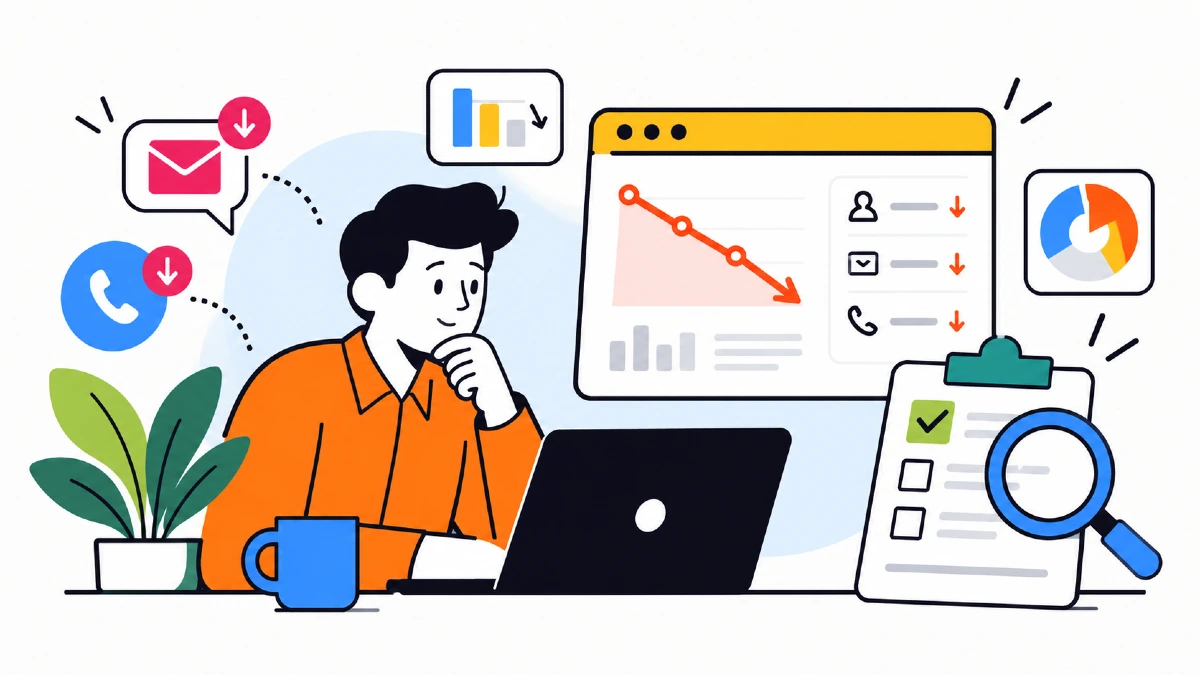
Business Enquiries Slowing Down in NZ?
Fewer enquiries coming into your business? Learn how to distinguish changing market demand from lost search visibility and website conversion